Thursday, September 29, 2011

Wednesday, September 21, 2011
On the Evolution of Esquire Subscription
I spent some time browsing the official website of Esquire (magazine). Esquire already has had a prominent place in American publication since it began in 1933, and it has featured some of America’s most famous writers including F. Scott Fitzgerald, Ernest Hemingway, Tim O’Brien, and Tom Wolfe. I wondered how its readership has changed. I assume the magazine has often been considered “classy” but in what sense of the term, through the years? How has it changed and evolved to keep up its prestige and popularity?


October 1933; September 2011
The website seems to have all the bells and whistles of other websites of mass media. The cutout advertisements of the early 20th century in the magazine have become video commercials on the website. In fact, there are more than just commercials. I was rather amused to see that Esquire’s website features minute-length videos of models and actresses stretching and smiling in blankets and bikinis. That’s classy. The thought of posting such a video link on this blog makes me blush.
The website is also very visually appealing in many other ways. The website is divided among the usual topics of the original men’s magazine – women, food, style, politics, and more – with several, several articles. In fact, there are so many links to articles and blogs that I can’t think of the website as a magazine “issue.” How often do writers have to publish for this? Can it be that they must work faster for the website than for the magazine? Or perhaps the magazine and the website mirror each other more than I can imagine. And yet, for all the glamour of pictures, ads, and incisive articles, it seems that concepts of a magazine easily lend themselves to online publication, so perhaps evolution is as steady as it is rapid.
Tuesday, September 20, 2011
Gathering Intel
Honestly, I felt a lot of resistance to my group's project decision of reporting on the drinking policies at the University of Pittsburgh and their consequences, mostly because
I don't really drink a lot of alcohol.
I have negligible experience with college party binge drinking.
I don't have qualms with others who do, nor do I consider myself superior. I have too much anxiety that has been soothed with too many of my own vices - I surrender especially quickly to the influence of caffeine. It's just that, quite frankly, I've never been much of a party girl, and all too wary of the negative side of drunkenness.
You can see by the number of "I's" in this entry that there is quite a bit of self-consciousness rather than confidence.
So, like anyone significantly independent of peer pressure, I went crying to the nearest authority figure. I confessed my sense of ineptitude regarding a project on inebriation to Professor Trachtenberg, who replied lightly, "You're an outside observer, so think of it as an anthropological study."
It's brilliant! I could definitely enjoy the historical and cultural aspects of research.
1) National Institute on Alcohol Abuse and Alcoholism
I came across this page while searching for ordinary text sources in the Pitt library
such as this, a collection of papers from a conference on alcohol and culture, sponsored by
the NIAAA. I think this source could be useful for reading about basic health risks and
statistics about drinking for Americans.
2) College Student Drinking statistics arranged by a Sociology Professor
More specifically, this is by Professor David J. Hanson of State University New York with
some easy to read information on college drinking culture. I appreciate the follow-up links
within the page, especially the one that does focus on binge drinking, apart from the facts
of the actual norm of students. He includes a bibliography which could further our
sociological point of view for the project.
3) Voice of America audio article of Binge Drinking
I was happy to have found a specific and applicable audio file, although I am yet unable to
embed it. Interestingly, this report is right on the mark of our project aims with comparative
information on events and school policies and strategies for drinking.
4) Harvard School of Public Health Scholarly Article on Student Binge Drinking
I suppose that the aims of the class is not how to sharpen scholarly researching skills,
but this paper looked so completely relevant that I desperately want to include it for my
studies for this writing project. I can't wait to do old-fashioned research!
5) Video Documentary Against Binge Drinking
Admittedly this video will be very one sided (I have not yet had time to see it!) but even in
hearing one side of a story is good - one is at least halfway in understanding, perhaps. Plus,
I was starstruck from seeing Robin Wright Penn, the actress of Buttercup in the cult classic
The Princess Bride (1987). Anyway, I was happy to have found serious-seeming video
footage relevant to our topic.
I hope my sources are varied and useful for our ambitious project. As a bit of an outsider, perhaps I will give strength to the project by adding cold, hard research in the absence of raw experience.
But - as my inner, abstinent, wayward guru concludes - even from non-experience one can find new enlightenment.
I don't really drink a lot of alcohol.
I have negligible experience with college party binge drinking.
I don't have qualms with others who do, nor do I consider myself superior. I have too much anxiety that has been soothed with too many of my own vices - I surrender especially quickly to the influence of caffeine. It's just that, quite frankly, I've never been much of a party girl, and all too wary of the negative side of drunkenness.
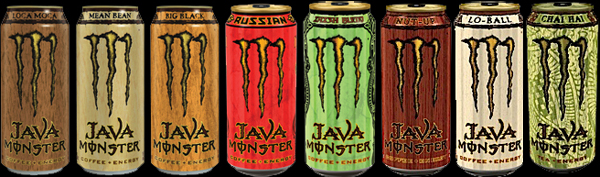
You can see by the number of "I's" in this entry that there is quite a bit of self-consciousness rather than confidence.
So, like anyone significantly independent of peer pressure, I went crying to the nearest authority figure. I confessed my sense of ineptitude regarding a project on inebriation to Professor Trachtenberg, who replied lightly, "You're an outside observer, so think of it as an anthropological study."
It's brilliant! I could definitely enjoy the historical and cultural aspects of research.
1) National Institute on Alcohol Abuse and Alcoholism
I came across this page while searching for ordinary text sources in the Pitt library
such as this, a collection of papers from a conference on alcohol and culture, sponsored by
the NIAAA. I think this source could be useful for reading about basic health risks and
statistics about drinking for Americans.
2) College Student Drinking statistics arranged by a Sociology Professor
More specifically, this is by Professor David J. Hanson of State University New York with
some easy to read information on college drinking culture. I appreciate the follow-up links
within the page, especially the one that does focus on binge drinking, apart from the facts
of the actual norm of students. He includes a bibliography which could further our
sociological point of view for the project.
3) Voice of America audio article of Binge Drinking
I was happy to have found a specific and applicable audio file, although I am yet unable to
embed it. Interestingly, this report is right on the mark of our project aims with comparative
information on events and school policies and strategies for drinking.
4) Harvard School of Public Health Scholarly Article on Student Binge Drinking
I suppose that the aims of the class is not how to sharpen scholarly researching skills,
but this paper looked so completely relevant that I desperately want to include it for my
studies for this writing project. I can't wait to do old-fashioned research!
5) Video Documentary Against Binge Drinking
Admittedly this video will be very one sided (I have not yet had time to see it!) but even in
hearing one side of a story is good - one is at least halfway in understanding, perhaps. Plus,
I was starstruck from seeing Robin Wright Penn, the actress of Buttercup in the cult classic
The Princess Bride (1987). Anyway, I was happy to have found serious-seeming video
footage relevant to our topic.
I hope my sources are varied and useful for our ambitious project. As a bit of an outsider, perhaps I will give strength to the project by adding cold, hard research in the absence of raw experience.
But - as my inner, abstinent, wayward guru concludes - even from non-experience one can find new enlightenment.
Tuesday, September 13, 2011
Credibility in NonFiction in the Information Age
Prompt: Find two nonfiction sites whose content you question as credible and post a short analysis of each (within the same post). What gives you pause? How would you compare its content to that of a site that you trust? Why do you trust the site that you trust? How do we decide what, in the rapidly changing digital nonfiction world, is credible and what isn’t? Come to class prepared to make your argument(s).
Actually, I don't peruse the Internet as thoroughly I should, and I subscribe to a limited amount of sources. For news I put my trust in CNN.com. For tips on health, I look up information on WebMD, and for trivia on movies, I use The Internet Movie Database. I like renowned news corporations and general databases. When asking a simple, honest question, I want a simple, honest answer - but from a source that is otherwise dense. A more thorough investigation of things is undertaken by someone who knows what he is seeking, or he learns along the way through the right paths of dense research.
This past week, at my internship at an online magazine, I had my first experience in thorough investigation for editing, or, to put it less imposingly, for simple fact checking. When the editor asked me to check all the dates, names, and places mentioned in an article I suddenly doubted everything. I was like the Christian disciple Peter who, after taking a few steps across the water surface towards his Lord, suddenly sinks below (Fear not, my skepticism extends to religion - I am merely making an allusion).
The article mentioned the Ku Klux Klan organization, whose repulsive creed is ethnic white supremacy, and it was necessary for me to look up details of their history. When I typed the name into the Google search engine, what appears prominently is the KKK home page. Here I realized what it means to me for a website to be credible or not.
http://www.kkk.com/
It's not statistics or facts that give me pause, but tone. I can neither confirm nor deny new information that is presented to me, but passionate and sensational words can make me suspicious immediately. On the aforementioned page I read "A message of love not hate", "stay firm in your convictions", and "regain a sense of loyalty." The abstract words are weighty but the information is not dense. And honestly, the KKK site is as sophisticated as their ideas. Look how innocent they try to seem! And it is precisely the impassioned innocence that incites my distrust. I wanted history, not creed. I wanted a cold record, not a heated manifesto.
Here might be the more proper website for researching Ku Klux Klan history:
http://www.history.com/topics/ku-klux-klan
At first glance it might seem boring, but now I feel so reassured by the amount of plain black text and colorless words. Furthermore, I am impressed with the variety of information that's immediately apparent. The home page of CNN.com too is filled with all kinds of headlines, not a self-glorifying statement of purpose on high moral ground. I am more inclined to trust the monotone of an anchorman on the BBC over the raving of a political or religious demagogue.
When looking for answers on non-fiction websites, the most important thing to consider is the source and not only where he stands, but where he comes from.
Consider http://answers.yahoo.com
This is a kind of database with a very general audience - namely anyone with a keyboard, preferably those with an account on Yahoo. Although one can easily ask a question, the answers are given by sources you can doubt even more quickly than you could a passionate orator. Here, there is no guise of affiliation, organization, or creed. And so I find that the reverse is true - the absence of passion and affiliation can also give us cause to doubt. We need more than a good tone and a well-dressed appearance. We need to ascertain who it is answering.
One night it so happened that my friend and I wanted to know the exact original text of the phrase "Now I am become death, the destroyer of worlds" from the Hindu scripture Bhagavad Gita, which was quoted by the physicist J. Robert Oppenheimer upon a test drop of the atomic bomb. Here was the end of our investigation:
http://answers.yahoo.com/question/index?qid=20100415015133AACk2Eb
The first answer is credible, and notice that it's also both the most dense and the least passionate of the answers. I resonate again with the even tone and specific information. The final answer points out the humor of the ignorantly worded question, which my friend and I thoroughly appreciated. Finding answers also depends on who is asking the questions for you.
Here is another kind of question and answer database:
http://about.com
The difference here is that the answer section of About.com, unlike Yahoo's commons, is populated with professional writers rather than the public (Yahoo is supported by professional writers, but not in that general forum). Perhaps the answers are more limited (well-written answers are harder to come by, what with the need of thorough investigations), but I can tell it's credible not only because of clues like density, organization, and fair knowledge, but because of the sources themselves. We trust CNN and IMDB not only because of the tone and thoroughness, but also simply because these names are reputable. They are backed by professionals (as in the former) and by consensus (as in the latter).
In the infinity of the Internet, my own skepticism is what serves me, my creed on non-conviction. "I neither believe nor disbelieve in anything" someone once told me. Credible or not, on the Internet, you get what you ask for, depending on who you ask and how you ask.
Actually, I don't peruse the Internet as thoroughly I should, and I subscribe to a limited amount of sources. For news I put my trust in CNN.com. For tips on health, I look up information on WebMD, and for trivia on movies, I use The Internet Movie Database. I like renowned news corporations and general databases. When asking a simple, honest question, I want a simple, honest answer - but from a source that is otherwise dense. A more thorough investigation of things is undertaken by someone who knows what he is seeking, or he learns along the way through the right paths of dense research.
This past week, at my internship at an online magazine, I had my first experience in thorough investigation for editing, or, to put it less imposingly, for simple fact checking. When the editor asked me to check all the dates, names, and places mentioned in an article I suddenly doubted everything. I was like the Christian disciple Peter who, after taking a few steps across the water surface towards his Lord, suddenly sinks below (Fear not, my skepticism extends to religion - I am merely making an allusion).
The article mentioned the Ku Klux Klan organization, whose repulsive creed is ethnic white supremacy, and it was necessary for me to look up details of their history. When I typed the name into the Google search engine, what appears prominently is the KKK home page. Here I realized what it means to me for a website to be credible or not.
http://www.kkk.com/
It's not statistics or facts that give me pause, but tone. I can neither confirm nor deny new information that is presented to me, but passionate and sensational words can make me suspicious immediately. On the aforementioned page I read "A message of love not hate", "stay firm in your convictions", and "regain a sense of loyalty." The abstract words are weighty but the information is not dense. And honestly, the KKK site is as sophisticated as their ideas. Look how innocent they try to seem! And it is precisely the impassioned innocence that incites my distrust. I wanted history, not creed. I wanted a cold record, not a heated manifesto.
Here might be the more proper website for researching Ku Klux Klan history:
http://www.history.com/topics/ku-klux-klan
At first glance it might seem boring, but now I feel so reassured by the amount of plain black text and colorless words. Furthermore, I am impressed with the variety of information that's immediately apparent. The home page of CNN.com too is filled with all kinds of headlines, not a self-glorifying statement of purpose on high moral ground. I am more inclined to trust the monotone of an anchorman on the BBC over the raving of a political or religious demagogue.
When looking for answers on non-fiction websites, the most important thing to consider is the source and not only where he stands, but where he comes from.
Consider http://answers.yahoo.com
This is a kind of database with a very general audience - namely anyone with a keyboard, preferably those with an account on Yahoo. Although one can easily ask a question, the answers are given by sources you can doubt even more quickly than you could a passionate orator. Here, there is no guise of affiliation, organization, or creed. And so I find that the reverse is true - the absence of passion and affiliation can also give us cause to doubt. We need more than a good tone and a well-dressed appearance. We need to ascertain who it is answering.
One night it so happened that my friend and I wanted to know the exact original text of the phrase "Now I am become death, the destroyer of worlds" from the Hindu scripture Bhagavad Gita, which was quoted by the physicist J. Robert Oppenheimer upon a test drop of the atomic bomb. Here was the end of our investigation:
http://answers.yahoo.com/question/index?qid=20100415015133AACk2Eb
The first answer is credible, and notice that it's also both the most dense and the least passionate of the answers. I resonate again with the even tone and specific information. The final answer points out the humor of the ignorantly worded question, which my friend and I thoroughly appreciated. Finding answers also depends on who is asking the questions for you.
Here is another kind of question and answer database:
http://about.com
The difference here is that the answer section of About.com, unlike Yahoo's commons, is populated with professional writers rather than the public (Yahoo is supported by professional writers, but not in that general forum). Perhaps the answers are more limited (well-written answers are harder to come by, what with the need of thorough investigations), but I can tell it's credible not only because of clues like density, organization, and fair knowledge, but because of the sources themselves. We trust CNN and IMDB not only because of the tone and thoroughness, but also simply because these names are reputable. They are backed by professionals (as in the former) and by consensus (as in the latter).
In the infinity of the Internet, my own skepticism is what serves me, my creed on non-conviction. "I neither believe nor disbelieve in anything" someone once told me. Credible or not, on the Internet, you get what you ask for, depending on who you ask and how you ask.
Thursday, September 1, 2011
First Assignment Post
This assignment frightened me. I am loathe to make a bad first impression while fearful that that is the inevitable result anyway. I have hesitated, procrastinated, and become intimidated so much that I must make myself answer directly and pointedly.
Thus, I have formatted the prompt and my responses in the style of an interview.
Why are you taking this course:
First, I am taking this course in order to fulfill my English Writing Major. I am required to take a "Topics" course. This particular topic, "NonFiction in the Information Age" seemed to fit that balance between interesting and practical. I had acknowledged that most journalism is typed, published, and posted over computers and cell phones, so I ought to become better acquainted with the world of social media, if I am to become any kind of writer at all.
What do you hope to learn?
I suppose I simply want to learn how to navigate through that world. I felt overwhelmed just to hear the title of the course, and now I am terribly overwhelmed with the thought of diving into this Internet infinity in my sense of insignificance. Perhaps my path is narrowed to this: I want to know how to contact and how to work for places that would hire and network with writers, and how writers begin working for such places. Honestly, I feel rather aimless, but maybe I would write for work if I were only given directions.
What kind of writing would you like to do?
I have yet to prove myself as a writer, and I have not been working hard enough to attain the status. Honestly, I became involved with English writing simply because I received generally good feedback in different English classes. Professor Jen Lee said that my strength might be in essay writing. People have said that I write very carefully, and that I tend to write with personal introspection, angst, and to reach a few good and succinctly written flashes of insight. My assignments were simply "well written." I don't mean to boast. Actually, I tell English professors that I write "because I suck at everything else," and even with their encouragement, my goals in writing were ill-defined. Simply put, I write carefully because I care about what I'm researching and what I'm feeling. I write carefully because I'm respectful and terribly fearful.
Throughout school, I tended to write about foreign cultures and about feeling isolated - so I suppose that I like to write about aliens and feeling alienated. These are my themes. But I also like to believe that I'm writing on someone else's behalf - to care about someone else's alienation. In that way, I always leap at the opportunity to write things like recommendation letters. And because I tend to write so personally, perhaps I might be an essayist. Sometimes I dream about writing those and short stories (I wrote a few decent ones in class, anyway) and maybe finding a better knack for drawing strip cartoons, which I've done as a persistent hobby. But dreams are futile and irritating without the products of effort. This is especially true for producing essays and short stories, isn't it? This semester I intend to create more such projects and finish them. Maybe I'm writing something worth reading, or I ought to make it so. But I'm still terribly fearful.
Who are 2 favorite non-fiction authors?
Ted Conover was the first non-fiction author I very deeply respected. He is a kind of investigative journalist who inhabits exclusive societies that he chooses for his writing. He wrote Coyotes: A Journey Across Borders with America's Illegal Immigrants as a migrant worker, and Newjack: Guarding Sing Sing, as a corrections officer. I was struck by how courageous he was to become part of others' difficult, difficult worlds and how empathetic he was to their lives, which he proved through his writing and through his breadth of research on the subject. I read those two books in high school and I will never forget them. Perhaps it's funny that I will remember each book more for the presentation of the content more than the content itself.
For similar reasons I have lately highly esteemed Joan Didion. She too wrote about specific societies with her own empathetic commentary. In comparison to Ted Conover she wrote from a little more distance and with a little more of her own angst. She wrote mostly about lives of socialites and street rogues in California with a sense of universal human strife. Some of her lines are going to haunt me:
"It is the phenomenon sometimes called “alienation from self.” In its advanced stages, we no longer answer the telephone, because someone might want something; that we could say no without drowning in self-reproach is an idea alien to this game. Every encounter demands too much, tears the nerves, drains the will, and the specter of something as small as an unanswered letter arouses such disproportionate guilt that answering it becomes out of the question. To assign unanswered letters their proper weight, to free us from the expectations of others, to give us back to ourselves – there lies the great, the singular power of self-respect. Without it, one eventually discovers the final turn of the screw: one runs away to find oneself, and finds no one at home." ~"On Self Respect"
I suppose I simply want to learn how to navigate through that world. I felt overwhelmed just to hear the title of the course, and now I am terribly overwhelmed with the thought of diving into this Internet infinity in my sense of insignificance. Perhaps my path is narrowed to this: I want to know how to contact and how to work for places that would hire and network with writers, and how writers begin working for such places. Honestly, I feel rather aimless, but maybe I would write for work if I were only given directions.
What kind of writing would you like to do?
I have yet to prove myself as a writer, and I have not been working hard enough to attain the status. Honestly, I became involved with English writing simply because I received generally good feedback in different English classes. Professor Jen Lee said that my strength might be in essay writing. People have said that I write very carefully, and that I tend to write with personal introspection, angst, and to reach a few good and succinctly written flashes of insight. My assignments were simply "well written." I don't mean to boast. Actually, I tell English professors that I write "because I suck at everything else," and even with their encouragement, my goals in writing were ill-defined. Simply put, I write carefully because I care about what I'm researching and what I'm feeling. I write carefully because I'm respectful and terribly fearful.
Throughout school, I tended to write about foreign cultures and about feeling isolated - so I suppose that I like to write about aliens and feeling alienated. These are my themes. But I also like to believe that I'm writing on someone else's behalf - to care about someone else's alienation. In that way, I always leap at the opportunity to write things like recommendation letters. And because I tend to write so personally, perhaps I might be an essayist. Sometimes I dream about writing those and short stories (I wrote a few decent ones in class, anyway) and maybe finding a better knack for drawing strip cartoons, which I've done as a persistent hobby. But dreams are futile and irritating without the products of effort. This is especially true for producing essays and short stories, isn't it? This semester I intend to create more such projects and finish them. Maybe I'm writing something worth reading, or I ought to make it so. But I'm still terribly fearful.
Who are 2 favorite non-fiction authors?
Ted Conover was the first non-fiction author I very deeply respected. He is a kind of investigative journalist who inhabits exclusive societies that he chooses for his writing. He wrote Coyotes: A Journey Across Borders with America's Illegal Immigrants as a migrant worker, and Newjack: Guarding Sing Sing, as a corrections officer. I was struck by how courageous he was to become part of others' difficult, difficult worlds and how empathetic he was to their lives, which he proved through his writing and through his breadth of research on the subject. I read those two books in high school and I will never forget them. Perhaps it's funny that I will remember each book more for the presentation of the content more than the content itself.
For similar reasons I have lately highly esteemed Joan Didion. She too wrote about specific societies with her own empathetic commentary. In comparison to Ted Conover she wrote from a little more distance and with a little more of her own angst. She wrote mostly about lives of socialites and street rogues in California with a sense of universal human strife. Some of her lines are going to haunt me:
"It is the phenomenon sometimes called “alienation from self.” In its advanced stages, we no longer answer the telephone, because someone might want something; that we could say no without drowning in self-reproach is an idea alien to this game. Every encounter demands too much, tears the nerves, drains the will, and the specter of something as small as an unanswered letter arouses such disproportionate guilt that answering it becomes out of the question. To assign unanswered letters their proper weight, to free us from the expectations of others, to give us back to ourselves – there lies the great, the singular power of self-respect. Without it, one eventually discovers the final turn of the screw: one runs away to find oneself, and finds no one at home." ~"On Self Respect"
Subscribe to:
Posts (Atom)